
Educational Resources
Theatre Styles
-
Suzuki Method
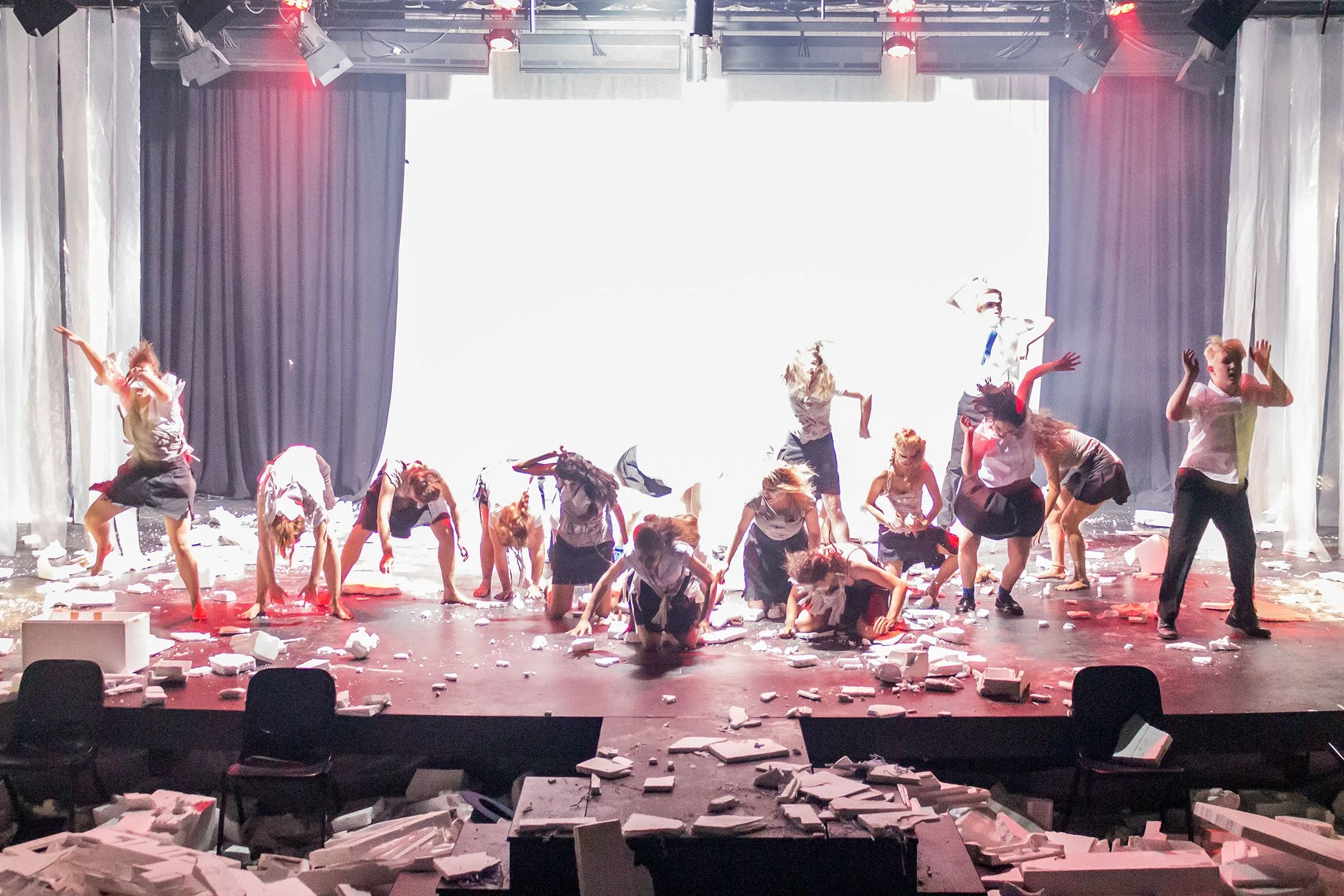
Suzuki Tadashi emerged in the culturally tumultuous times of Japan in the 70’s when many artists were asking what it meant to be Japanese in an increasingly Western world.
With Waseda Little Theatre he developed a series of exercises that encouraged actors to re-centre their performance in their body in space and not just in their minds.
Utilising forms from traditional performance styles, Suzuki’s exercises demand a profound physical awareness and presence that grounds the performer in space generating ‘presence’ even when dynamically still and silent. The demanding exercises challenge the performer’s equilibrium in more than just the physical sense of remaining centred and energised while still capable of any artistic expression.
Raw, animal energy channelled through precise physical action, engagement in the moment through oppositional tension, an integration of body, voice, mind, emotion and spirit that is unhindered by physical or psychological tension.
The Suzuki Method is practice of showing people that they are capable of more than they believe or fear. It is the hard work that shows incremental improvements by performing the same thing again and again and going deeper and deeper. It reminds us that if all the greater things we have no control over and yet affect us are taken away, there is really only one thing that is wholly dependent on the individual – your choice.
-
Butoh
Butoh is an abstract, dance-drama hybrid that evolved in the culturally uncertain era of post WWII Japan.
In an attempt to create performance which was uniquely Japanese among the Western influence, yet eschewing traditional forms for the shocking and avant-garde, Hijikata and Ohno created a performance tradition that explored the aspects Japanese society usually repressed.
A primal physicality contrasted with an extraordinary use of precision, subtlety, and durational performance, exploring the beauty found in the grotesque, honest and authentic, raw emotion, violence, pain, sexuality and everything subversive that constitutes the human experience, Butoh has one of the broadest of possible definitions, with something more like traditions that keep evolving than specific conventions.
While Butoh’s abstract expressionism makes it accessible to any performer or audience on a subconscious level, this also means that what defines it is equally open to interpretation. Even Hijikata and Ohno had differing ideas and now, with its practice spread across the world, the most common elements agreed upon are Ohno’s concept of ‘The Dead Body’, Noguchi Taiso (Noguchi gymnastics) which are an exploration of being moved by natural forces, the container and the contents; Butoh Fu, the physical response to an imaginative connection to stimulus, imagery or poetry; which all equate to the transformative nature of the dancer whereby anything is able to be expressed as its essence.
-
The Viewpoints
The Viewpoints are.
They are not something you do. They exist and all we need to do is bring our attention toward them in order to become more conscious of, and connected to our ensemble, our performance, our audience, and our choices.
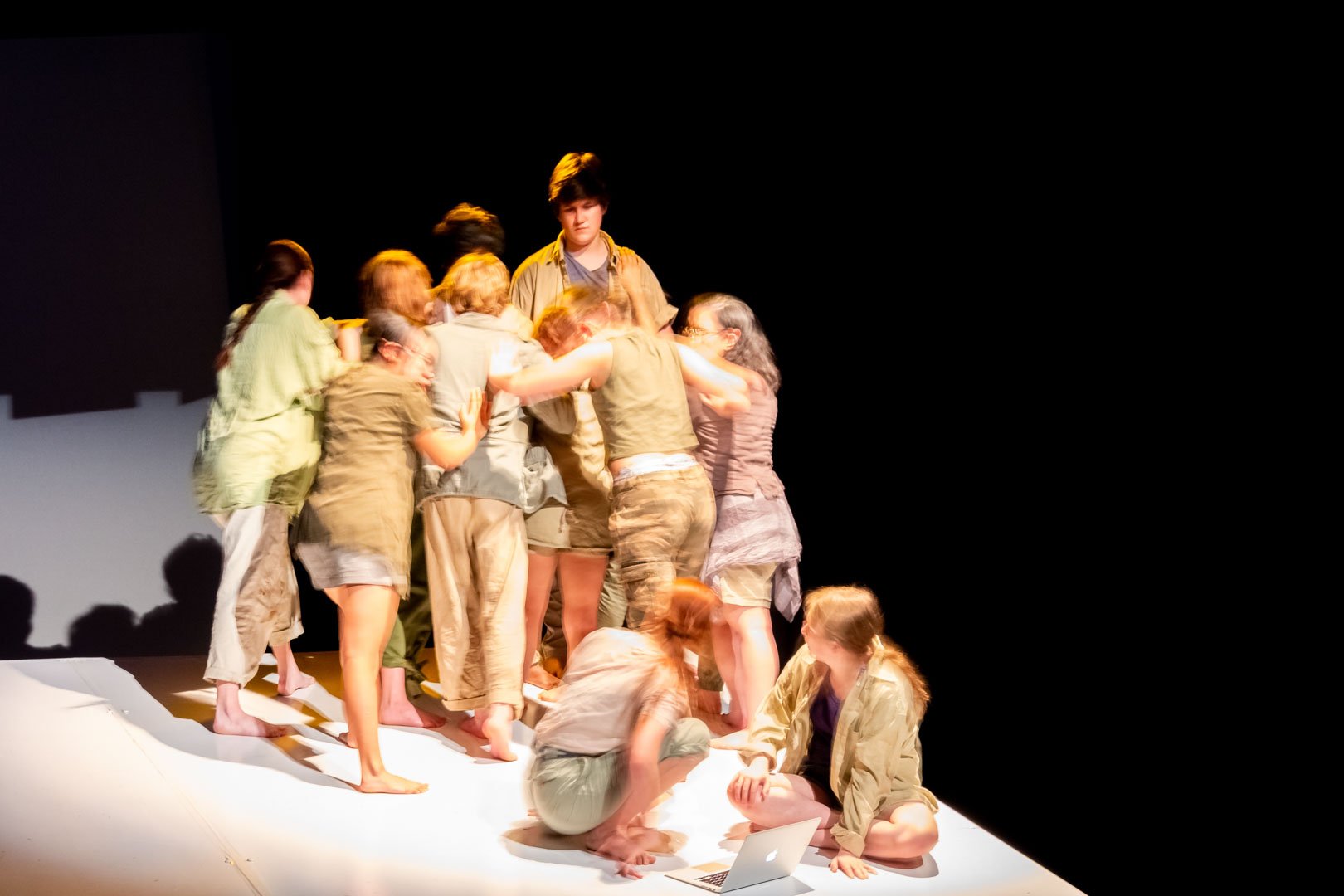
The Viewpoints began with choreographer Mary Overlie who strove to find a language for the fundamentals of the body in time and space. Building on this work, theatre director Anne Bogart and the SITI company experimented and expanded Overlie’s original six Viewpoints to the current nine.
Non-hierarchically divided into Viewpoints of Time and Space they are:
Kinaesthetic Response, Tempo, Duration
Spatial Relationships, Shape, Gesture, Floor Pattern, Architecture
With Repetition existing in both Time and Space.
The Vocal Viewpoints are likewise fundamental elements of speech that can be explored in the same way as the physical and temporal Viewpoints to explore the possibilities of meaning and beauty when they integrate. Bogart identifies these as Pitch, Timbre, Volume, Silence, Repetition, Acceleration/Deceleration.
In actor training, a heightened awareness of these points of view allows for a shared unspoken language in an ensemble, connecting them through group impulse and heightened awareness of the time and space they share. This heightened awareness brings life and spontaneity to moments on stage where everything is seamlessly folded into the performance through a shared agreement to play.
In direction and performance devising, the Viewpoints can be used as fundamental building blocks of performance and allow for a clarity of expression and a means of expressing stage action more poetically. An awareness of the Viewpoints and the composition techniques created by Bogart and fellow American director Tina Landau is adaptable to any style, text, or process.
It has formed the fundamental language of performance and creation in many companies and performers around the world.
-
Theatre of the Absurd
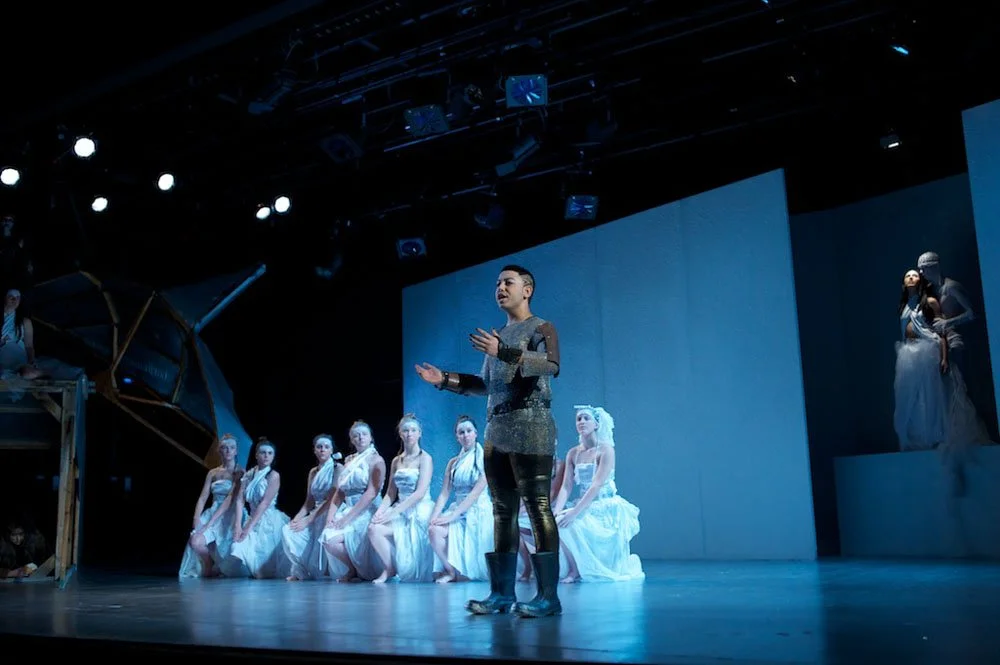
Theatre of the Absurd is a term coined retrospectively by Martin Esslin in his book of the same name in 1961. Under the term he grouped a collection of plays and playwrights that were part of the zeitgeist from the 1940’s through to the 1970’s, emerging from war torn Europe, the artistic influence of post-modernists and surrealists and the philosophies of Nihilism and Existentialism.
The works rejected traditional concepts of narrative and character and subverted language to show its inconsistencies as a means of communicating the human condition. The plays and the playwrights explored the Existential question of who or what was responsible for meaning in human life and, if meaning is a construction, does that invalidate its worth? Albert Camus described the search for meaning in a meaningless universe as absurd, but used the word to mean dissonant, or out of tune.
From its roots in the work of Alfred Jarry, Theatre of the Absurd is a theatrical representation of desperate search for meaning in post-war Europe and America. The seminal works of Samuel Beckett, Eugene Ionesco, Harold Pinter and Edward Albee still echo through to contemporary pop-culture of the cynical, darkly comic and frustrating inexpressibility of the human condition.
It asks the question
IF EVERYTHING THAT MADE MEANING IN YOUR LIFE –
What you see as ‘real’
Your concept of Time
Beliefs you feel were unquestionably true
What you know as yourself, your identity
What you know of society and other people
The concepts that manifest as behaviours
– i.e. law, economics, morality, philosophy
EVERYTHING THAT YOU COULD USE TO MAKE MEANING –
Language, science, spirituality, sensory perception,
emotion, intellect, imagination, and memory
AND THAT MADE YOUR LIFE MEANINGFUL
WERE TAKEN AWAY, OR ABANDONNED BY YOU,
WHAT WOULD YOU USE TO FILL THE VOID THAT REMAINED?
KNOWING THAT THIS VOID FILLING THING IS A
REPLACEMENT, A SELF-DEVISED CONSTRUCTION,
A PLACEBO,
WHAT IMPORTANCE WOULD YOU GIVE IT?
WHAT WOULD YOUR LIFE BE?
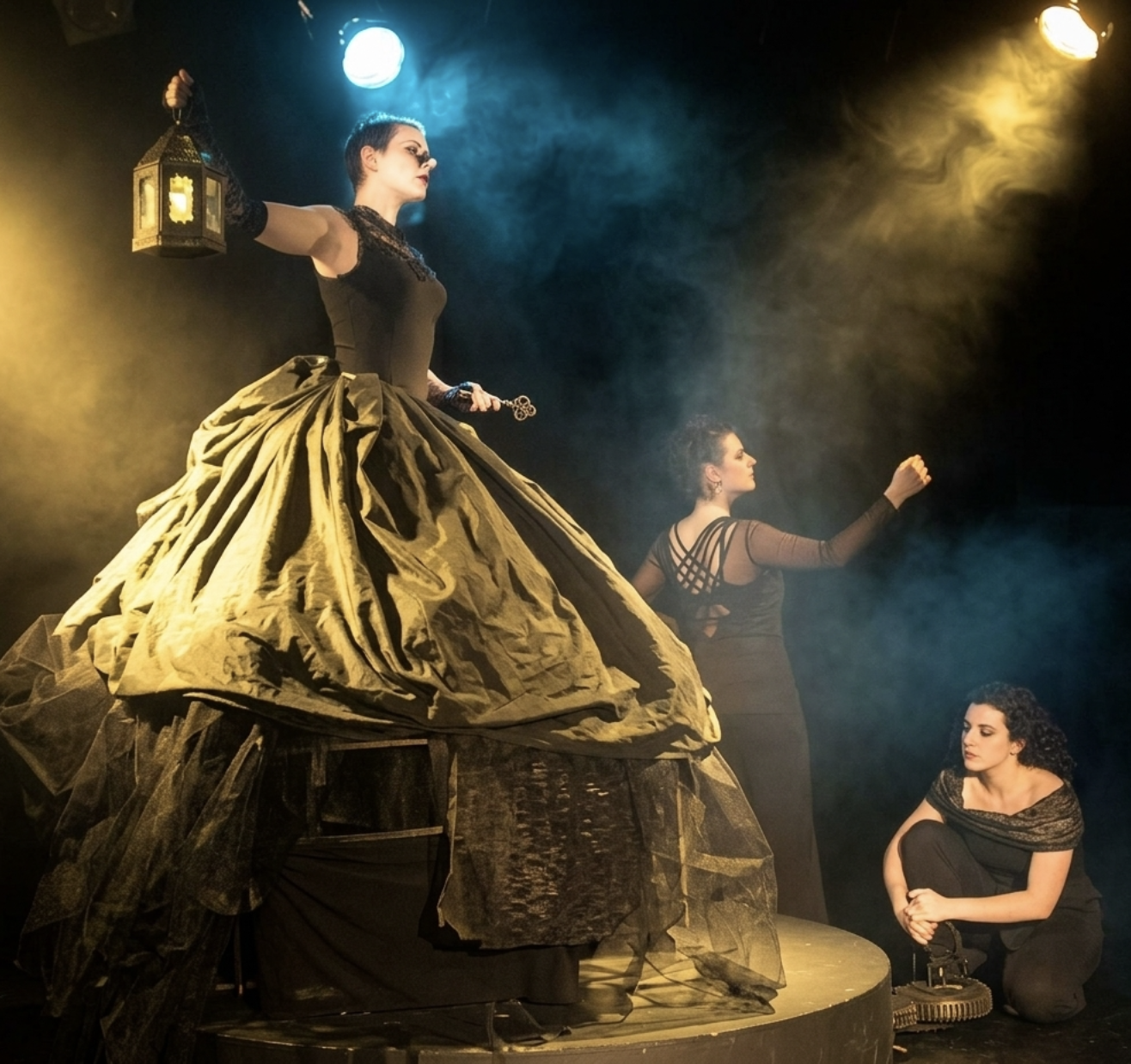
Theatre Theorists
-
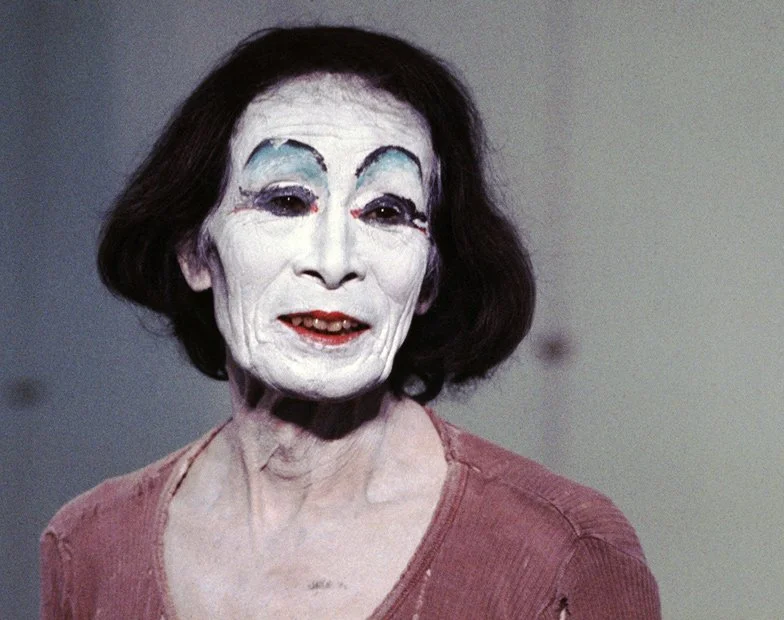
Kazuo Ohno
“The dancer’s costume is to wear the universe.”
A class with Kazuo Ono is no ordinary class. When does the class begin? When we take the train from Tokyo to Yokohama? When we climb the path which leads to the house on a hill? While we sit around the table in his studio, drinking tea and listening to him before beginning to work?
-
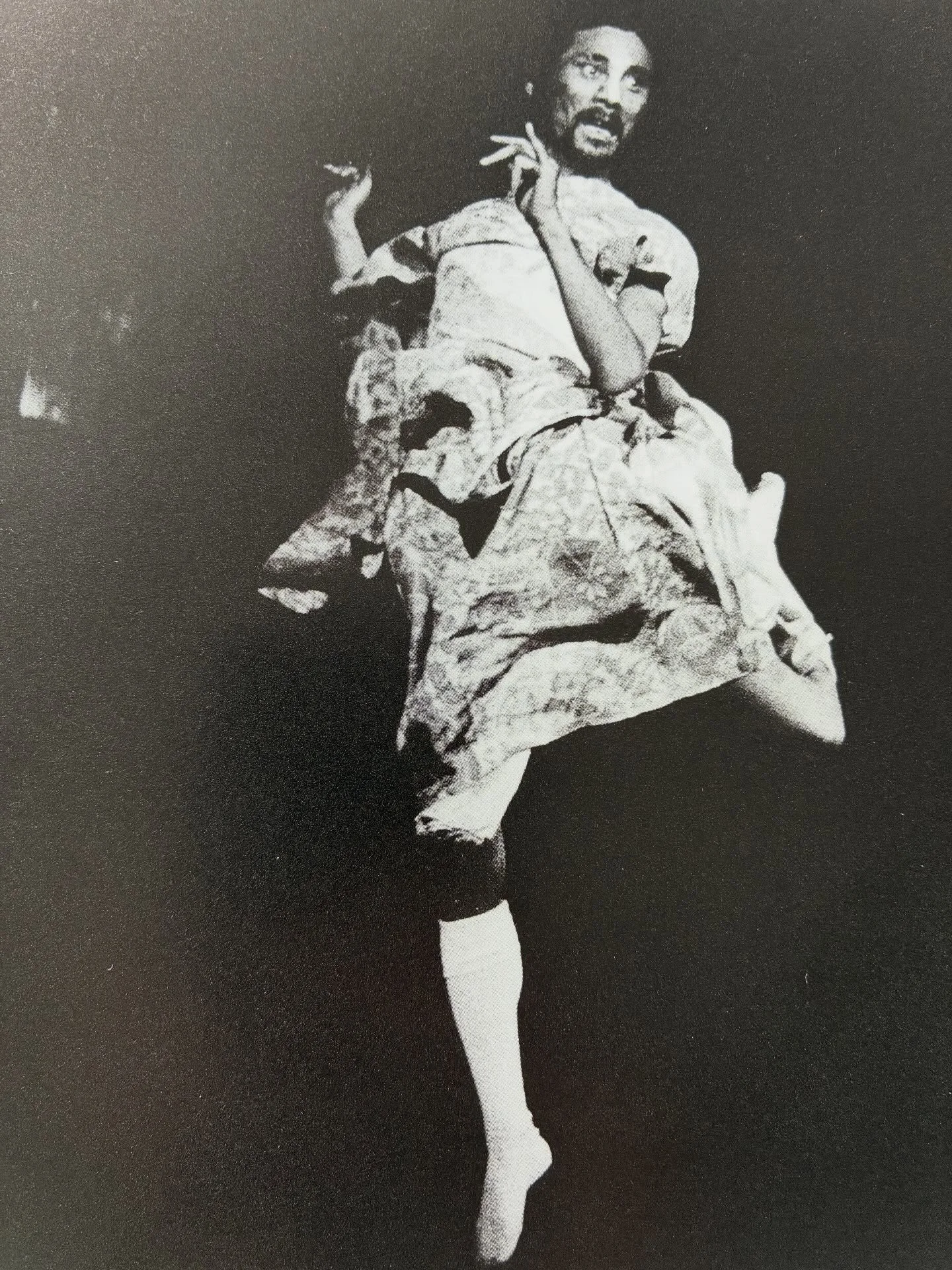
Tatsumi Hijikata
"Western dance begins with its feet firmly planted on the ground whereas Butoh begins with a dance wherein the dancer tries in vain to find his feet. What has happened to the tucked-in feet? What has become of our bodies?"
-
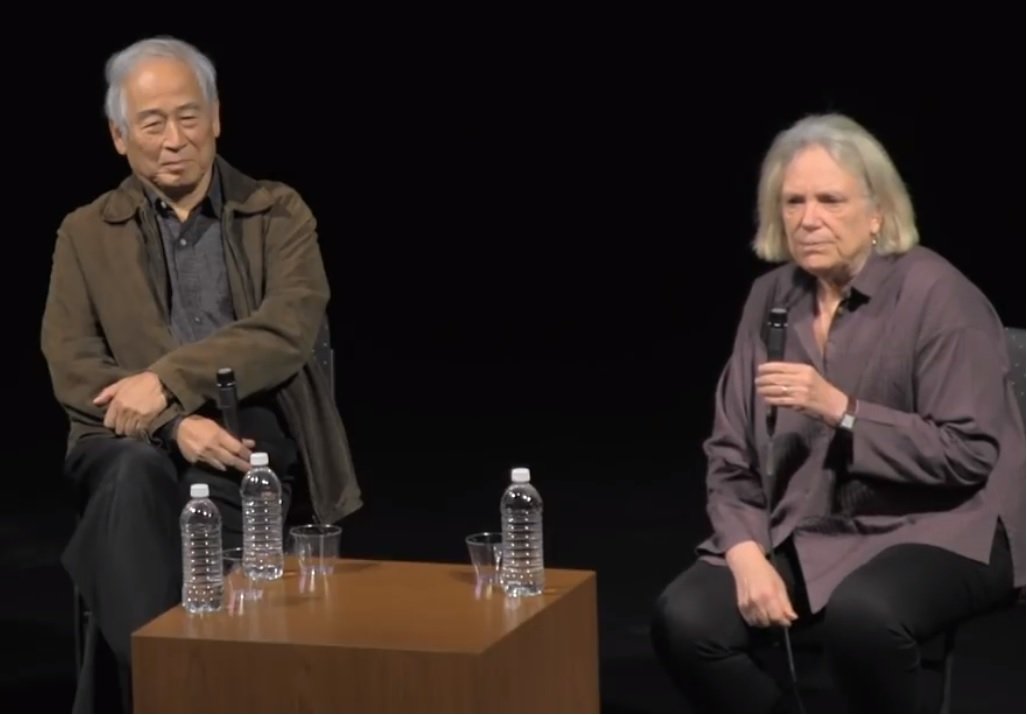
Tadashi Suzuki
The 1960’s were an era of transition in Japan. "There was great confusion as Japan moved from an agricultural to an industrial society," (Suzuki) recalls. "You had large populations accumulating in metropolitan areas, rapid economic growth, and tensions between the values of the traditional and modern periods. There was social anxiety, and lots of student demonstrations.
"So instead of finding employment," Suzuki smiles, "a group of us decided to start a theatre with me as its leader. We were creating a theatre to posit a response to the identity crisis that existed in Japan at that time."
Explore blogs and articles
Lessons for Actors That Work for Real People Too
Tatey’s thoughts on performance, art, and training to be a decent person…
Comprehensive Bibliography and Resource Guide
-
Suzuki Method of Actor Training
Publication-quality research bibliography covering Tadashi Suzuki, SCOT, Suzuki actor training, Suzuki–Viewpoints integration, pedagogy, dissertations, archives, and international training organizations.
Seminal Books
Allain, P. (2002). The art of stillness: The theatre practice of Tadashi Suzuki. Methuen Drama.
Allain, P. (2009). The theatre practice of Tadashi Suzuki: A critical study with DVD examples. Methuen Drama.
Carruthers, I., & Takahashi, Y. (Eds.). (2004). The theatre of Suzuki Tadashi. Cambridge University Press.
Minami, R., Carruthers, I., & Gillies, J. (2001). Performing Shakespeare in Japan. Cambridge University Press.
Senda, A. (1997). The voyage of contemporary Japanese theatre (J. T. Rimer, Trans.). University of Hawai‘i Press.
Suzuki, T. (1986). The way of acting: The theatre writings of Tadashi Suzuki. Theatre Communications Group.
Suzuki, T. (2015). Culture is the body. Theatre Communications Group.
Zarrilli, P. B. (Ed.). (2002). Acting (re)considered (2nd ed.). Routledge.
Journal Articles and Chapters
Allain, P. (1998). Suzuki training. TDR: The Drama Review, 42(1).
Allain, P. (1999). Training wrestlers: Staging Shakespeare with Tadashi Suzuki. New Theatre Quarterly, 15(57), 79–89. https://doi.org/10.1017/S0266464X00015238
Barbe, F., & Diedrich, A. (2023). Beyond the stomp: The Nobbs Suzuki Praxis as an Australian variant of the Suzuki Method of Actor Training. Theatre, Dance and Performance Training, 14(1). https://doi.org/10.1080/19443927.2022.2152860
Beeman, W. O. (1982). Tadashi Suzuki’s universal vision. Performing Arts Journal, 5(2).
Brandon, J. R. (1978). Training at the Waseda Little Theatre: The Suzuki Method. TDR, 22(4), 29–42. https://doi.org/10.2307/3181723
Coen, S. (1995). The body is the source. American Theatre.
Goto, Y. (2005). The theatre of Suzuki Tadashi. Asian Theatre Journal, 22(2), 356–361.
Lampe, E. (1993). Collaboration and cultural clashing. TDR, 37(1), 147–156.
Lampe, E. (1997). Disruptions in representation. Theatre Research International, 22(2), 105–110.
Lampe, E. (2001). A site of stillness and surprise. In I. Watson (Ed.), Performance training.
Loth, J., & Pensalfini, R. (2021). Body. Breath. Text. Freedom. Theatre, Dance and Performance Training, 12(1), 80–94. https://doi.org/10.1080/19443927.2020.1725616
Loth, J. (2022). Voicing transformation within heightened forms. Theatre, Dance and Performance Training, 13(1), 75–91. https://doi.org/10.1080/19443927.2021.1962401
Montanini, L. (2024). SITI Training: Viewpoints and the Suzuki Method for Cross-Cultural Collaboration. New Theatre Quarterly, 40(1), 48–61. https://doi.org/10.1017/S0266464X23000349
Wang, S. (2024). Embodied cognition in the Suzuki Method of Actor Training. Proceedings of ICLAHD 2024. https://doi.org/10.2991/978-2-38476-319-1_4
Lodi, F. (2015/2016). A prática do treinamento como atividade sagrada na SCOT. Urdimento. https://doi.org/10.5965/1414573102252015034
Brandão, L., & Fernandes, B. E. (2021). O método Suzuki precede uma filosofia. Urdimento. https://doi.org/10.5965/1414573103422021e0106
Dissertations and Theses
Staley, C. (2023). What's the point?: Multipodal orbits in the Suzuki Method of Actor Training (Doctoral dissertation, University of Pittsburgh).
Martinez, M. (2009). Teaching and learning Suzuki Method of actor training: One teacher's perspective.
Denton, J. The Suzuki Method: Its application in contemporary actor training.
Lampe, J. Training bodies: Suzuki actor training and physical presence.
Crum, M. The actor's centre: Suzuki training and embodied presence.
Japanese Scholarship and SCOT Resources
SCOT (Suzuki Company of Toga): https://www.scot-suzukicompany.com/en/
Tadashi Suzuki profile and essays via SCOT.
Performing Arts Network Japan: https://performingarts.jpf.go.jp/en/article/7004/
Japanese-language scholarship indexed via CiNii: https://cir.nii.ac.jp
Suzuki–Viewpoints Research
Bogart, A. (2001). A director prepares. Routledge.
Bogart, A. (2007). And then, you act. Routledge.
Bogart, A., & Landau, T. (2005). The viewpoints book. Theatre Communications Group.
Lampe, E. (2001). A site of stillness and surprise.
Montanini, L. (2024). SITI Training.
Archives, Video, and Image Resources
https://www.scot-suzukicompany.com/en/
https://performingarts.jpf.go.jp/en/
https://www.youtube.com/results?search_query=Tadashi+Suzuki+SCOT
https://www.youtube.com/results?search_query=Suzuki+Method+Actor+Training
https://www.youtube.com/results?search_query=SITI+Suzuki+Training
International Organizations and Training Centres
SITI Archive – https://siti.org/
Zen Zen Zo – https://www.zenzenzo.com
Integrated Actor Training – https://integratedactortraining.com/the-training/
Thursday Group – https://thursdaygroup.net/training
CenTACo – https://centaco.com.au/training/
OzFrank Theatre Company – https://www.facebook.com/OzFrankTheatreCompany/
Simon Woods LAB – https://www.facebook.com/simonwoodslab/
-
Butoh
Seminal Books on Butoh
Baird, B. (2012). Hijikata Tatsumi and Butoh: Dancing in a pool of gray grits. Palgrave Macmillan. DOI: https://doi.org/10.1057/9781137012623
Fraleigh, S., & Nakamura, T. (Eds.). (2006). Hijikata Tatsumi and Ohno Kazuo. Routledge.
Viala, J., & Masson-Sekine, P. (1988). Butoh: Shades of darkness. Shufunotomo.
Klein, S. (1988). Ankoku Butoh: The premodern and postmodern influences on the dance of utter darkness.
Kurihara, N. (Ed.). (2000). The most remote thing in the universe: Critical analysis of Hijikata Tatsumi's Butoh dance.
Ohno, K., & Ohno, Y. (2004). Kazuo Ohno's world: From without and within. Wesleyan University Press.
Tatsumi Hijikata
https://www.nonaka-hill.com/artists/119-tatsumi-hijikata/
https://www.dance-archive.net/en/archive/personalities/p3.html
https://performingarts.jpf.go.jp/en/article/6981/
https://ambrabergamasco.com/tatsumi-hijikata-articles-interviews-and-video-footage/
Kazuo Ohno
https://www.kazuoohnodancestudio.com/
https://dance-archive.net/en/features/features_50.html
Articles and Book Chapters
Taylor, S. A. (2012). Butoh: A bibliography of Japanese avant-garde dance. Collection Building, 31(1), 15–18. DOI: https://doi.org/10.1108/01604951211199137
Greiner, C. (2011). Butoh: A dance experience to recreate the body beyond the East–West dichotomies. DOI: https://doi.org/10.15055/00002440
Yokoyama, A. C. (2017). O campo onde brotou o Butoh: Antes do filho, o pai.
Aji, A. W., & Abdillah, A. (2024). Body theater Butoh: A review of Tatsumi Hijikata and Kazuo Ohno. APRON: Jurnal Pemikiran Seni Pertunjukan, 12(1), 145–155.
Dissertations and Theses
Breiten, J. B. (2016). The Butoh body performed: Aesthetic and embodiment in Butoh dance (Master's thesis, University of Colorado Boulder).
Belviso, H. (2020). The Jekyll's Hide Project: Devising Jekyll's Hide (Doctoral dissertation, Edith Cowan University).
Hornblow, M. A. (2004). Special affects: Compositing images in the bodies of Butoh (Doctoral thesis, University of Technology Sydney).
Rocha, D. A. P. (2018). Butoh: O artesão de si mesmo (Master's dissertation, Universidade Federal do Pará).
Yokoyama, A. C. (2019). Hana to Tori: A trajetória expressivo-poética de Yoshito Ohno (Master's dissertation, Universidade de São Paulo).
Websites and Archives
https://www.kazuoohnodancestudio.com/
https://www.youtube.com/watch?v=-_-Y2xN78Hshttps://dance-archive.net/en/
https://performingarts.jpf.go.jp/en/
Images and Video Resources
https://dance-archive.net/en/features/features_50.html
https://www.youtube.com/results?search_query=Kazuo+Ohno+Butoh
https://www.youtube.com/results?search_query=Tatsumi+Hijikata+Butoh
https://www.youtube.com/results?search_query=Sankai+Juku
Contemporary Butoh Companies, Schools, and Theorists
https://www.kazuoohnodancestudio.com/
https://www.suenbutohcompany.net/
https://www.yumikoyoshioka.com/
-
The Viewpoints - Anne Bogart
Books
Bogart, A., & Landau, T. (2005). The viewpoints book: A practical guide to viewpoints and composition. Theatre Communications Group.
Overlie, M. (2016). Standing in space: The six viewpoints theory and practice. Fallon Press.
Bogart, A. (2001). A director prepares: Seven essays on art and theatre. Routledge.
Bogart, A. (2007). And then, you act: Making art in an unpredictable world. Routledge.
Bogart, A. (2014). What's the story? Essays about art, theatre and storytelling. Routledge.
Bogart, A. (2021). The art of resonance. Methuen Drama.
Articles and Chapters
Perucci, T. (2017). On stealing Viewpoints. Performance Research, 22(5), 113–124. Article Page
O'Hanlon, B., & Porteiro, T. M. (2021). Em torno dos Viewpoints e a partir da SITI-Company. Urdimento: Revista de Estudos em Artes Cênicas, 3(42), 1–22. Article Page (English)
Silva, L. M. (2011). Strategies and choices: Preliminary notes of the Viewpoints' philosophy. Revista Aspas, 1(1), 56–63.Article Page
Silva, L. M. (2012). The new American dance elements and the roots originating of the Viewpoints' system. Revista Aspas, 2(1), 84–93. Article Page
Yazbek, G. M. (2021). Entre o acaso e a escolha: Reflexões acerca da prática do Viewpoints. Urdimento: Revista de Estudos em Artes Cênicas, 42. Article Page
Cullen, S. D. (2024). The constructive deconstruction of Mary Overlie's Six Viewpoints. Theatre Survey. Article Page
Montanini, L. (2024). SITI Training: Viewpoints and the Suzuki Method for Cross-Cultural Collaboration. New Theatre Quarterly. Article Page
Dissertations and Theses
Clark, C. L. (2012). Viewpoints: Liberatory Ensemble and Character (Doctoral dissertation, Brigham Young University). https://scholarsarchive.byu.edu/etd/3858/
Horn, E. (2010). Developing the Individual to Strengthen the Whole: The Application of Viewpoints Training to Impact the Social Cognitive Development of Actors in a High School Ensemble (Master's thesis, University of Central Florida). https://stars.library.ucf.edu/etd/4399/
Goldbaum, M. R. (2016). Teoria e prática do viewpoints (Doctoral thesis, Universidade de São Paulo). https://teses.usp.br/teses/disponiveis/27/27156/tde-06022018-094418/pt-br.html
Silva, L. M. (2013). Escuta-ação: pistas para a criação do ator em diálogo com o sistema dos Viewpoints (Master's dissertation, Universidade de São Paulo). https://teses.usp.br/teses/disponiveis/27/27156/tde-11022014-114616/pt-br.html
Websites, Images, and Video Resources
Primary archive of SITI Company publications, training resources, production documentation, photographs, and institutional history.
https://www.sixviewpoints.com/
The principal source for original Six Viewpoints writings, photographs, archival documents, and historical records.
https://www.youtube.com/@SITICompanyArchive
Contains workshops, lectures, demonstrations, interviews, and performance documentation relevant to Viewpoints pedagogy.
Hosts interviews, essays, and recorded discussions featuring Anne Bogart, SITI practitioners, and scholars of contemporary actor training.
https://danceinteractive.jacobspillow.org/
-
Master Theatre Studies
A Graduate-Level Reference Guide for Theatre and Performance Studies
SECTION I: FOUNDATIONAL TEXTS (1–50)
Classical Theatre Theory
Aristotle. (1996). Poetics (M. Heath, Trans.). Penguin Books.
Artaud, A. (1958). The theatre and its double (M. C. Richards, Trans.). Grove Press.
Brecht, B. (1964). Brecht on theatre: The development of an aesthetic (J. Willett, Ed. & Trans.). Methuen.
Performance Studies and Theatre Theory
Auslander, P. (1999). Liveness: Performance in a mediatized culture. Routledge.
Carlson, M. (1996). Performance: A critical introduction. Routledge.
Fischer-Lichte, E. (2008). The transformative power of performance. Routledge.
Lehmann, H.-T. (2006). Postdramatic theatre. Routledge.
Schechner, R. (2013). Performance studies: An introduction (3rd ed.). Routledge.
Directing and Theatre Practice
Brook, P. (1968). The empty space. Atheneum.
Bogart, A. (2001). A director prepares. Routledge.
Boal, A. (1985). Theatre of the oppressed. Theatre Communications Group.
Theatre Anthropology and Physical Practice
Barba, E. (1995). The paper canoe. Routledge.
Barba, E., & Savarese, N. (1991). A dictionary of theatre anthropology. Routledge.
Grotowski, J. (1968). Towards a poor theatre. Simon & Schuster.
Scenography and Contemporary Performance
Baugh, C. (2005). Theatre, performance and technology. Palgrave Macmillan.
Howard, P. (2002). What is scenography? Routledge.
SECTION II: ACTING, PERFORMER TRAINING, AND EMBODIED PRACTICE (51–100)
Stanislavski and the Russian Tradition
Stanislavski, K. (2008). An actor's work. Routledge.
Stanislavski, K. (2009). An actor's work on a role. Routledge.
Carnicke, S. M. (2008). Stanislavsky in focus. Routledge.
Psychological and Method-Based Acting
Adler, S. (2000). The art of acting. Applause.
Meisner, S., & Longwell, D. (1987). Sanford Meisner on acting. Vintage.
Hagen, U. (1973). Respect for acting. Macmillan.
Chubbuck, I. (2005). The power of the actor. Gotham.
Psychophysical and Intercultural Training
Zarrilli, P. B. (2009). Psychophysical acting. Routledge.
Oida, Y., & Marshall, L. (2002). The invisible actor. Methuen.
Physical Theatre, Mime, and Movement
Lecoq, J. (2002). The moving body. Routledge.
Callery, D. (2001). Through the body. Nick Hern Books.
Laban, R. (1988). The mastery of movement. Northcote House.
Voice and Speech
Berry, C. (1973). Voice and the actor. Harrap.
Linklater, K. (2006). Freeing the natural voice. Drama Publishers.
SECTION III: DIRECTING, DEVISING, DRAMATURGY, AND COLLABORATIVE CREATION (101–150)
Directing Theory and Practice
Brook, P. (1987). The shifting point. Harper & Row.
Brook, P. (1995). The open door. Theatre Communications Group.
Bogart, A. (2007). And then, you act. Routledge.
Donnellan, D. (2006). The actor and the target. Nick Hern Books. 2
Devising and Collective Creation
Oddey, A. (1994). Devising theatre. Routledge.
Heddon, D., & Milling, J. (2006). Devising performance. Palgrave Macmillan.
Govan, E., Nicholson, H., & Normington, K. (2007). Making a performance. Routledge.
Dramaturgy
Luckhurst, M. (2006). Dramaturgy: A revolution in theatre. Cambridge University Press.
Turner, C., & Behrndt, S. (2008). Dramaturgy and performance. Palgrave Macmillan.
Collaborative and Ensemble Theatre
Williams, D. (Ed.). (1999). Collaborative theatre. Routledge.
Kiernander, A. (1993). Ariane Mnouchkine and the Théâtre du Soleil. Cambridge University Press.
Experimental Companies
Etchells, T. (1999). Certain fragments. Routledge.
Callens, J. (Ed.). (2004). The Wooster Group and its traditions. Peter Lang.
SECTION IV: CONTEMPORARY PERFORMANCE, LIVE ART, PERFORMANCE ART, AND POSTDRAMATIC PRACTICE (151–200)
Performance Studies
Schechner, R. (2003). Performance theory. Routledge.
Auslander, P. (2008). Theory for performance studies. Routledge.
Live Art
Heathfield, A. (Ed.). (2004). Live: Art and performance. Tate Publishing.
Heddon, D., & Klein, J. (2012). Histories and practices of live art. Palgrave Macmillan.
Performance Art
Goldberg, R. (2011). Performance art: From futurism to the present. Thames & Hudson.
Abramović, M. (2016). Walk through walls. Crown Archetype.
Postdramatic and Experimental Theatre
Lehmann, H.-T. (2006). Postdramatic theatre. Routledge.
Marranca, B. (2008). Theatre without borders. PAJ Publications. 3
Digital and Intermedial Performance
Dixon, S. (2007). Digital performance. MIT Press.
Causey, M. (2006). Theatre and performance in digital culture. Routledge.
Documentation, Memory, and Participation
Taylor, D. (2003). The archive and the repertoire. Duke University Press.
White, G. (2013). Audience participation in theatre. Palgrave Macmillan.
SECTION V: INTERCULTURAL PERFORMANCE, ASIAN THEATRE, BUTOH, DANCE, AND GLOBAL PERFORMANCE TRADITIONS (201–250)
Theatre Anthropology and Interculturalism
Barba, E. (1995). The paper canoe. Routledge.
Barba, E., & Savarese, N. (1991). A dictionary of theatre anthropology. Routledge.
Pavis, P. (1996). The intercultural performance reader. Routledge.
Richard Schechner and Victor Turner
Schechner, R. (1985). Between theater and anthropology. University of Pennsylvania Press.
Turner, V. (1982). From ritual to theatre. PAJ Publications.
Turner, V. (1987). The anthropology of performance. PAJ Publications.
Japanese Theatre Traditions
Noh
Zeami. (1984). On the art of the Noh drama. Princeton University Press.
Kabuki
Brandon, J. R. (1989). Kabuki: Five classic plays. University of Hawaii Press.
Kawatake, T. (2003). Kabuki: Baroque fusion of the arts. International House of Japan.
Bunraku
Keene, D. (1990). Noh and Bunraku. Columbia University Press.
Butoh
Hijikata, T. (2000). From being jealous of a dog's vein. NTT Publishing.
Fraleigh, S., & Nakamura, T. (Eds.). (2006). Hijikata Tatsumi and Ohno Kazuo. Routledge.
Ohno, K., & Ohno, Y. (2004). Kazuo Ohno's world. Wesleyan University Press. 4
Suzuki Method
Suzuki, T. (1986). The way of acting. Theatre Communications Group.
Allain, P. (1997). The art of stillness. Methuen.
Chinese Theatre
Mei, L. (2010). The stagecraft of Mei Lanfang. Beijing University Press.
Min Tian. (2008). The poetics of difference and displacement. Hong Kong University Press.
Postcolonial and Decolonial Performance
Bharucha, R. (1990). Theatre and the world. Routledge.
Said, E. W. (1978). Orientalism. Pantheon Books.
Chakrabarty, D. (2000). Provincializing Europe. Princeton University Press.
African and Indigenous Performance
Banham, M., Hill, E., & Woodyard, G. (Eds.). (1995). The Cambridge guide to African and Caribbean theatre. Cambridge University Press.
Soyinka, W. (1976). Myth, literature and the African world. Cambridge University Press. 5
Inner conflict makes for interesting tension within the core of an actor’s character. Often its stillness is mistaken for a solid basis or core when really it is the ongoing dynamic between two forces in opposition.