
Inner Conflict
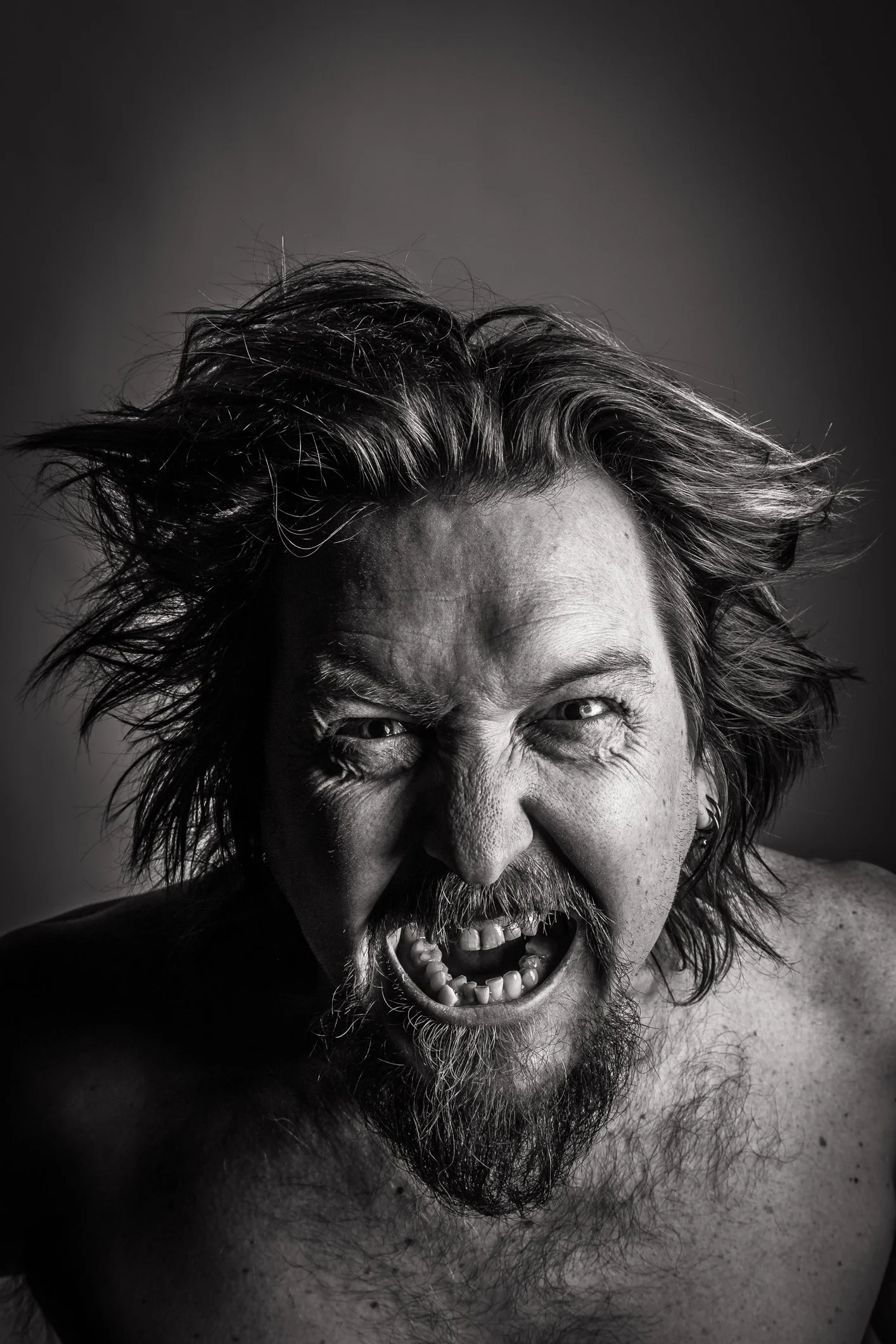
Resolving the Primary Inner Conflict is the Super-Objective.
Picture by Craig English Photography
“When I see an anxious person I ask myself, what do they want? For if a person wasn’t wanting something outside of their control, why would they be stricken by anxiety? ”
What lies at the heart of your search in life – the problem that you learn how to solve as you live?
What is the inner conflict that drives us forward to find some resolution and acceptance?
What is the impossible thing we are trying to control?
What is the desire that we cannot overcome and cannot seem to achieve?
Inner conflict makes for interesting tension within the core of an actor’s character. Often its stillness is mistaken for a solid basis or core when really it is the ongoing dynamic between two forces in opposition.
It is an unresolved arc between the primal and the social, the physical and the spiritual, chaos and control.
The energy generated by these forces in opposition becomes the external expression of character. Their attitude toward their outer world is determined by the quality of their inner landscape, complete with all of its self-sabotage, dumb luck, and bitter victories.
Consider the energetic path of the self-righteous, the arrogant and the angry. These attitudes are examples which demonstrate a desire to dominate and control through their voice, action and presence. The desire to control comes from a fear of not being in control. The greater the demonstration of the attitude, the greater the fear. The quality of the conflict between chaos and control, unique to this individual, is played out in their attitude toward it and therefore, their external action.
Not only this, but once they define themselves in this way – according to their external attitude – they then define everyone else in relation to that attitude. In our example, a combatant attitude sees everyone adversarially. When no actual adversary exists, they project their inner conflict on others, or against themselves rather than accepting these conflicting internal elements as essential parts of the whole.
Until these inner forces are seen as constructive rather than conflicting elements there will always be a friction at the heart of the character, the energy of it evident to anyone human enough to sense it.
